

Double cleansing with a cleansing balm is one of those habits that sounds like more work than it actually is, and once you understand why the two steps do different jobs, skipping either one starts to feel like leaving half the wash cycle undone. I run long-haul freight, gone four or five days at a stretch, sleeper cab, truck stop showers more nights than not, and by the end of a run my face is carrying diesel exhaust, sunscreen baked on from hours of direct light through the windshield, and whatever grime rides in through a cracked window on a hot stretch of interstate. One cleanse never got all of that off. Two steps, done in the right order, finally did.
A single-step wash asks one product to do two very different jobs at once, break down oil-based buildup like sunscreen and dissolve everyday dirt and sweat. Most cleansers are built for one of those jobs, not both, which is why a foaming face wash can scrub for two minutes and still leave a faint film behind. The double cleanse method splits that work into two passes on purpose. A JUNO & Co. Clean 10 Cleansing Balm goes first and breaks down the oil-based stuff, sunscreen, built-up sebum, road grime. A regular cleanser follows and finishes the job on what's left. Below is exactly how I do it, in order, with the mistakes that used to trip me up along the way.
One pass never got the sunscreen off. Two steps finally did.
Every step in this guide is built around JUNO & Co. Clean 10 Cleansing Balm, a ten-ingredient oil balm that's become the first half of my nightly routine. It's the product that made me stop scrubbing and start actually finishing the wash.
Amazon Check Today's Price on Amazon →Step 1: Start completely dry, before you touch water
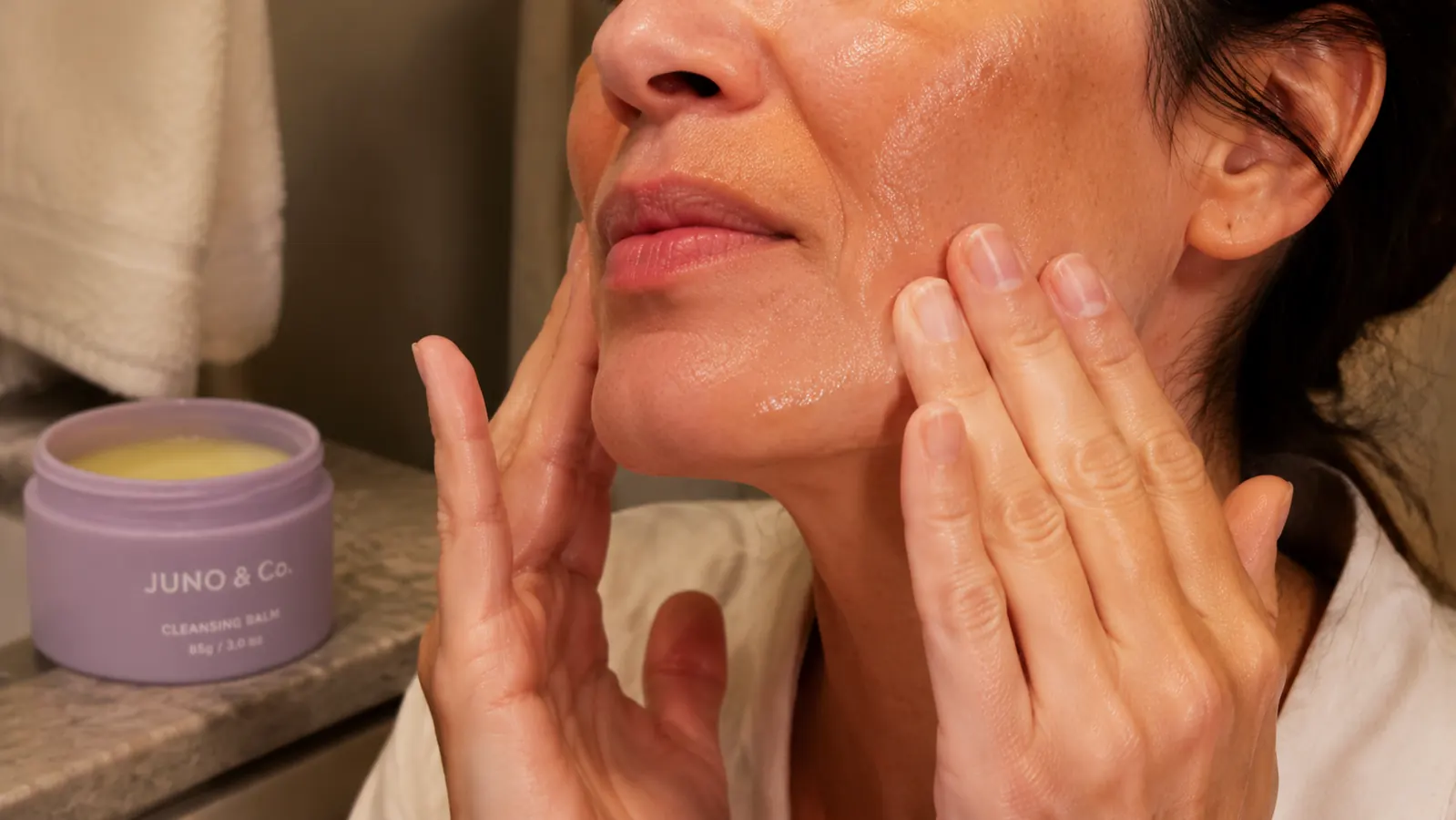
The first pass happens on a dry face, dry hands, no water at all. That felt backwards to me the first time I tried it, every cleanser I'd used before wanted a wet face to start. Scoop out about a dime to nickel-sized amount and work it between your palms first, just long enough to feel it start turning from a solid balm into an oil. Then apply it straight to your dry, unwashed face, forehead, cheeks, chin, and along the jawline where sunscreen and sweat tend to collect the most on a long shift.
Applying to dry skin matters more than it seems like it should. Water on your face before this step dilutes the oil and slows down how well it binds to the sunscreen, sebum, and grime sitting on your skin. Oil dissolves oil most efficiently when there's nothing else in the way. I learned this the hard way during my first week trying the method, splashing water on first out of habit, and wondering why the balm felt like it wasn't doing much of anything. Skip that habit and the difference is immediate.
This is also the step where I'd tell anyone starting out not to overthink the amount you're using. More balm doesn't mean a better cleanse, it just means a longer rinse and a slicker sink. A dime-to-nickel scoop covers a full face with room to spare, and if you're finding you need double that to feel like it's working, the more likely issue is technique, not quantity. I wasted half a jar my first two weeks before I figured that out.
Step 2: Massage for a real sixty seconds, not a quick swipe
This is the step almost everyone rushes, and it's the one that decides whether the whole method actually works. Work the balm across your face in slow circles for a full sixty seconds, closer to ninety if it's been a long day with heavy SPF reapplied more than once. You'll feel it change texture as you go, from a slightly thick balm to a slippery oil that starts pulling makeup, sunscreen, and the day's grime off the surface of your skin. If you're wearing waterproof mascara or a heavier sunscreen, you'll actually see it start sliding by the thirty-second mark.
A quick fifteen-second swipe doesn't give the oil enough contact time to fully break down what's sitting on your skin, which is the single biggest reason people try a cleansing balm once, decide it doesn't do much, and go back to their old face wash. I timed myself with my phone for the first two weeks, which sounds excessive, but it's how I found out my normal thirty seconds of ordinary washing was less than half of what this step actually needs to work.
Step 3: Rinse, then follow with a real second cleanser
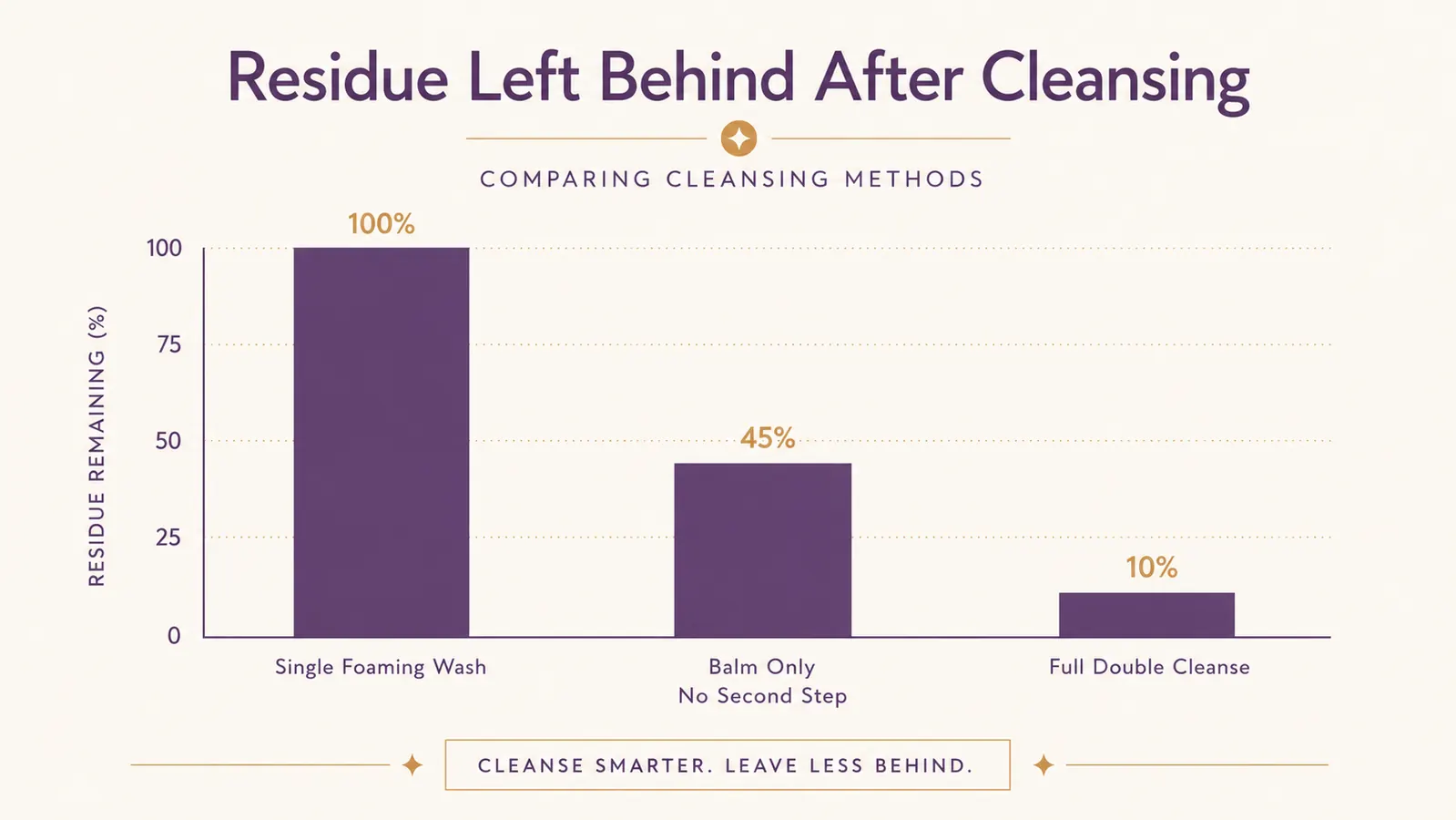
Rinse the balm off with warm water. It'll emulsify into a milky rinse rather than staying oily, which is a sign the formula is working the way it's supposed to. At this point your face is clean of sunscreen, makeup, and the oil-based buildup, but this isn't the finish line yet. Follow it with a gentle gel or foaming cleanser, a normal thirty-second wash, to clear away whatever the balm loosened but didn't fully rinse away, plus any actual sweat and surface dirt the oil step wasn't built to handle.
Skipping the second cleanser is the mistake I made most often in the beginning, mostly because I was tired and the balm already felt like it had done the job. On those nights I'd wake up with a faint filmy feel along my T-zone, not greasy exactly, but not fully clean either. That's the residue the second step is built to clear. Using the balm alone as a full wash works fine occasionally, on a light day with no makeup and minimal sunscreen, but it isn't a substitute for the full two-step method on a day your face has actually been worked hard.
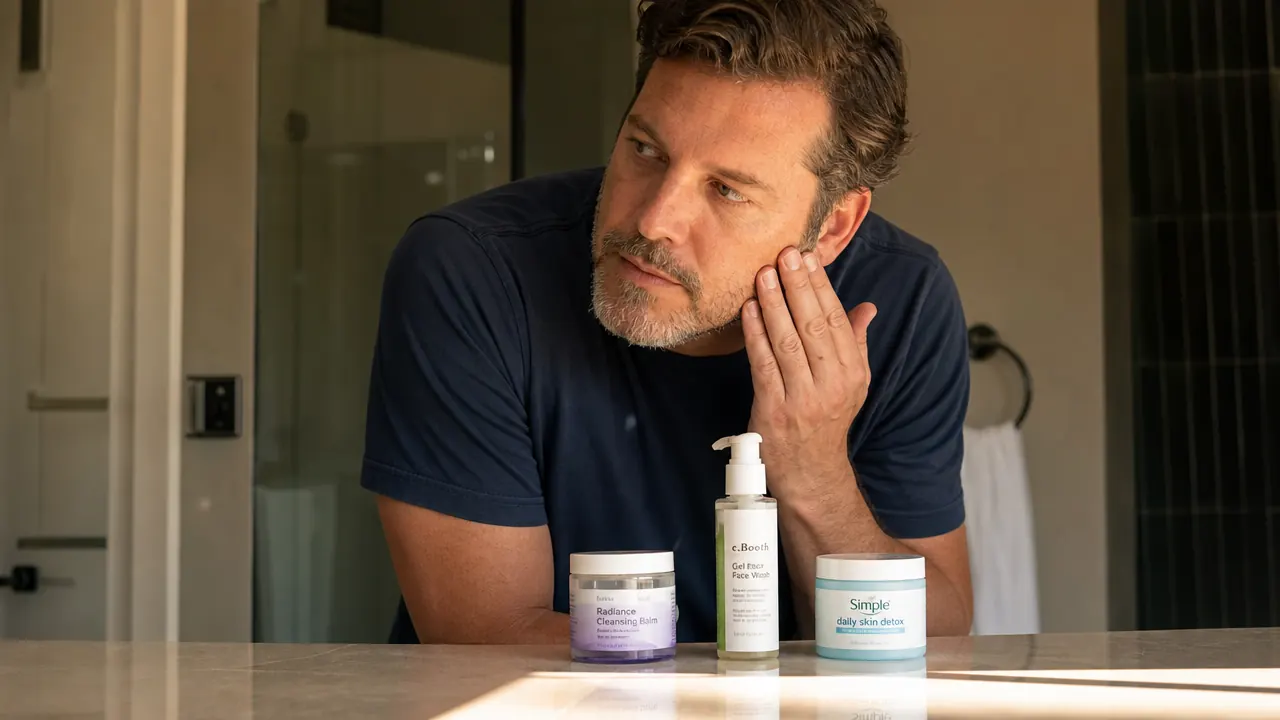
Pick a second cleanser that's genuinely gentle, not another exfoliating or heavily fragranced product. This step is finishing the job the balm started, not scrubbing your skin raw. A basic gel cleanser with no added fragrance is what I settled on after trying a couple of foaming washes that left the same tight, squeaky feeling I was trying to get away from in the first place. If your second cleanser leaves your skin feeling stripped, that's a sign to swap it out, not a sign to wash harder.
Step 4: Layer your moisturizer while skin is still slightly damp
Pat your face mostly dry after the second cleanse, but don't wait until it's bone dry before moisturizing. Skin absorbs a moisturizer more effectively while there's still a little dampness left on the surface, which matters even more after a double cleanse, since you've just stripped away a full day's worth of buildup along with the oils your skin makes on its own. I keep it simple, a basic hydrating moisturizer, nothing with added fragrance, applied within a couple minutes of finishing the rinse.
This is also where I noticed the biggest difference between double cleansing and my old single-step routine. A foaming wash alone used to leave my skin feeling tight, almost squeaky, in a way that felt clean in the moment but usually meant I'd stripped more than I should have. After a proper double cleanse followed by moisturizer while skin's still a little damp, that tightness never shows up. My face feels clean without feeling stripped, which is the actual goal, not just the absence of visible grime.
Step 5: Know when to adjust, and track it honestly
Not every night needs the full two-step process. On a short day, minimal sun exposure, no makeup, light or no sunscreen, one balm pass followed by a light rinse can be enough. Save the full double cleanse for the days that earned it, heavy SPF reapplied more than once, a long stretch behind the wheel with the windshield doing its worst, or any day you can feel the grime sitting on your face by the time you park for the night. Overdoing the second cleanser step on a light day can leave skin feeling drier than it needs to be.
Watch for the signs that the balance is off in either direction. If your skin feels tight, flaky, or unusually reactive a few hours after washing, you're probably over-cleansing, either doing the full two-step every single night regardless of how light the day was, or using a second cleanser that's stronger than your skin needs. If you're still noticing a filmy residue by morning or small breakouts along your jaw that won't clear up, you're likely under-cleansing, skipping the second step too often, or rushing the sixty-second massage down to a quick swipe.
I check in with my skin about once a week rather than every night, since day-to-day changes are small enough to miss if you're looking too closely too often. A quick note on my phone, one line, how my skin felt that morning, was more useful than I expected. After about three weeks of that, a pattern showed up on its own, the days I skipped the full double cleanse and paid for it the next morning, and the days a light single pass was genuinely all I needed. That pattern is different for every skin type and every schedule, which is exactly why tracking it yourself beats following a rigid rule someone else wrote.
What Else Helps
The double cleanse method does most of the heavy lifting, but a few habits outside the actual wash made a real difference for me. Reapplying sunscreen matters less if you're not also washing it off properly at the end of the day, so the two habits work together rather than one covering for the other. I also started changing the pillowcase in my sleeper cab more often than I used to, since a clean face washed properly still picks up buildup fast if it's resting against the same fabric for days straight.
Water matters here too, though probably less than people assume. Staying reasonably hydrated on long stretches behind the wheel keeps the dry, tight feeling from compounding on top of whatever the day's sun and cab air already did to my skin. It's a small lever, not the main one, but it's one more thing working in the same direction as the cleansing routine instead of against it.
The other habit worth mentioning is keeping the routine simple everywhere else. I don't stack a full lineup of serums and treatments on top of the double cleanse, mostly because I've found that a clean, properly moisturized face doesn't need much else to look and feel healthy. A basic moisturizer and, on sunlit mornings, actual sunscreen before I'm back on the road cover the rest. Every time I've added extra steps just because a product looked interesting, my skin has been more reactive, not less, which is usually the sign a routine has gotten more complicated than it needs to be. None of this replaces the actual two-step wash. It just helps the results hold up between one cleanse and the next.
One pass never finished the job. Splitting it into two, oil first, then a real cleanser, is what finally got me to a clean face that didn't feel stripped by morning.
Two real steps, sixty seconds each, and a face that's actually clean by the time you're done.
This whole routine starts with JUNO & Co. Clean 10 Cleansing Balm, a ten-ingredient formula built to melt off sunscreen, makeup, and a full day's grime before your regular cleanser finishes the job.
Amazon Check Today's Price on Amazon →