
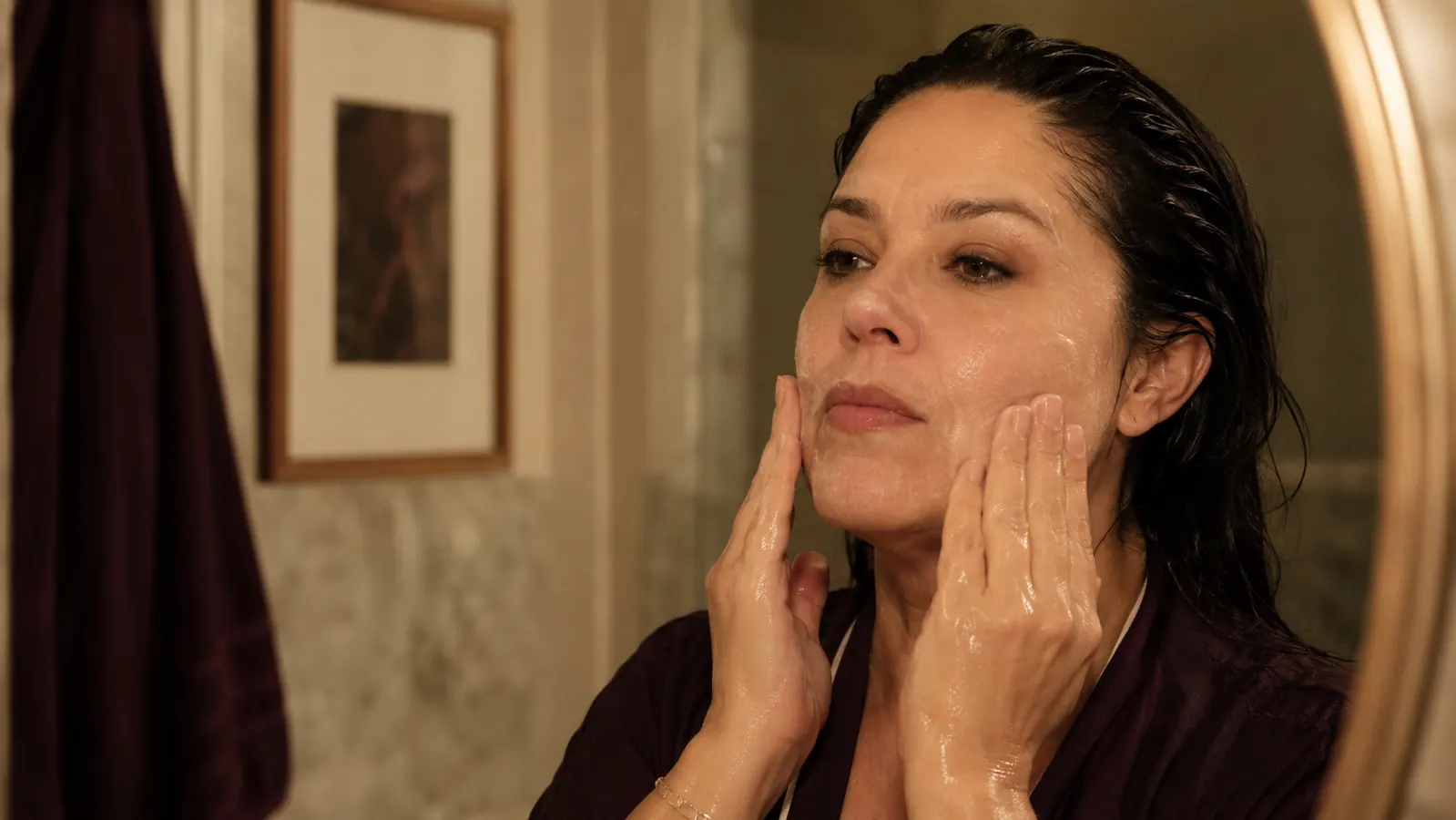
I run a grocery delivery route for a regional service six days a week, in and out of the car from eight in the morning until whenever the last order clears, usually somewhere past six. That means SPF 50 reapplied at least twice because I'm walking up driveways in direct sun half the day, plus a swipe of waterproof mascara most mornings because the app wants a doorstep photo with my face in frame for the customer's peace of mind. By the end of a shift my face has three layers on it, sunscreen, whatever light makeup survived the heat, and a film of general outside grime, and for over a year my foaming face wash barely touched any of it. I'd scrub for a solid two minutes most nights and still catch mascara flakes under my eyes the next morning. Four months ago my sister-in-law, Renata, handed me a small jar of JUNO & Co. Clean 10 Cleansing Balm she'd bought on a whim and said, just try it once before bed. That one night changed how I wash my face.
This isn't a rented opinion. I bought my own jar of the JUNO balm after that first trial and I'm most of the way through a second one now. What follows is what actually happened to my skin over four months of daily use, sunscreen removal, waterproof mascara removal, and the handful of nights I was too tired to do it right and paid for it the next morning.
The Quick Verdict
A genuinely effective melt-away balm for daily SPF and waterproof makeup removal, especially for skin that's outside most of the day, though the jar format and rinse-off feel take some getting used to.
Amazon Check Today's Price →Still scrubbing at sunscreen and mascara two minutes after you should be done washing your face?
JUNO's Clean 10 balm is built on just ten ingredients and melts SPF, waterproof makeup, and daily grime off on contact, no scrubbing required. Check today's price and see why one jar changed a full year of nightly frustration for me.
Amazon Check Today's Price on Amazon →How I've Used It
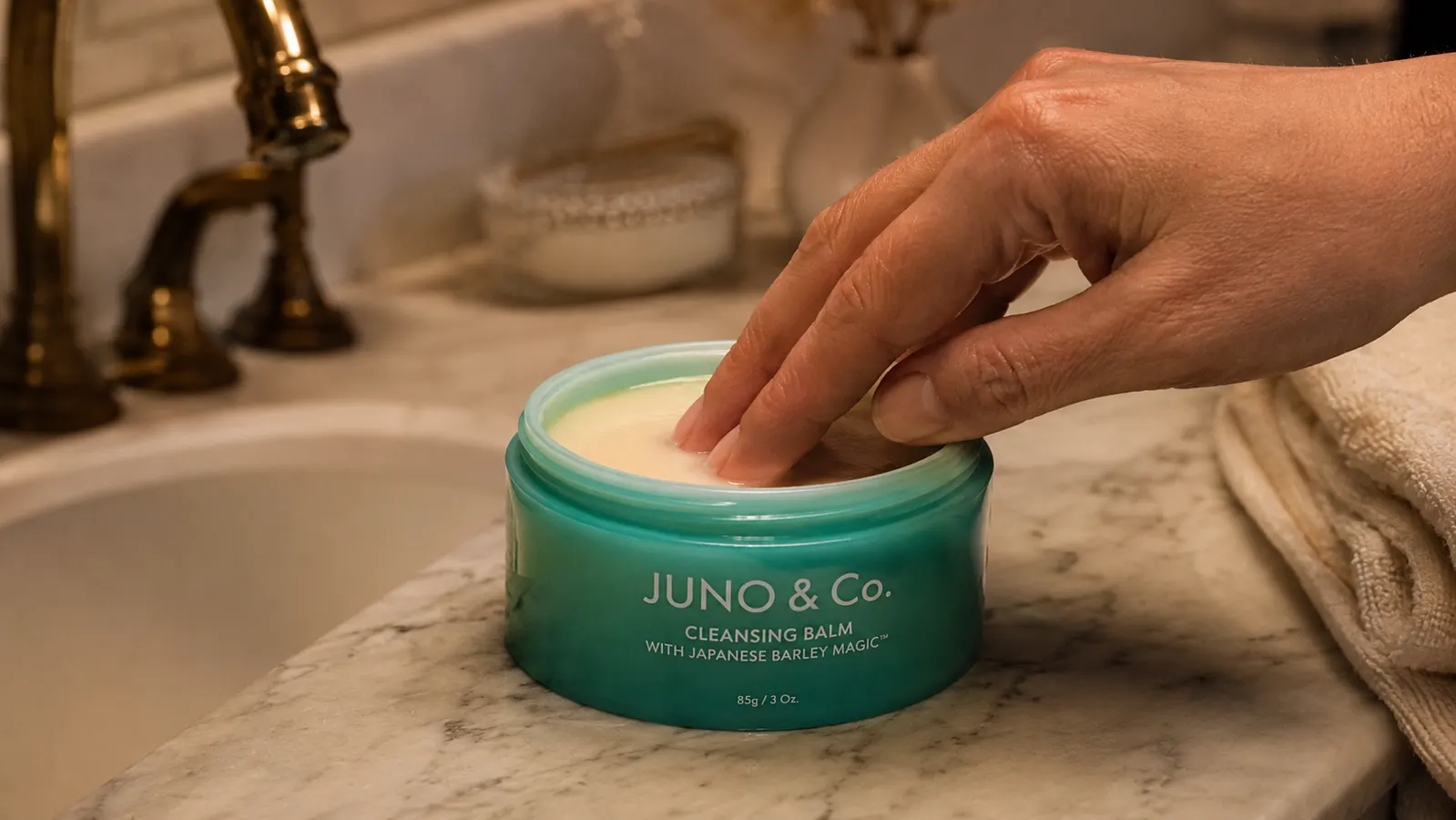
The first night, I did exactly what the jar's insert suggested, a dime-to-nickel-sized scoop worked between dry hands, then massaged straight onto a completely dry face, no water first. That part took some trust. Every cleanser I'd used before wanted a wet face to start. Working it in dry across my cheeks, forehead, and jaw, I could feel it turn from a solid balm into a slippery oil within about fifteen seconds, and I watched my mascara start sliding down toward my cheekbones almost immediately, which was both satisfying and a little alarming the first time.
I rinse with warm water after about thirty to forty-five seconds of massaging, and the balm emulsifies into a milky rinse that comes off clean without that tight, squeaky feeling I used to get from my old foaming wash. On nights with heavier sunscreen, usually after a long stretch of porch deliveries in direct August sun, I go back in for a second, shorter pass, maybe twenty seconds, before my regular cleanser. That two-step only happens maybe twice a week now. Most nights one pass with the balm is enough on its own.
The exceptions are the nights I'm running on fumes, usually after a Saturday route that runs long, when I've splashed water on my face and used the balm as a rushed all-in-one instead of following it with a second cleanser. Those mornings I sometimes wake up with a little extra shine along my T-zone, which taught me this works best as step one of a routine, not the whole routine, on the days my skin has the most sunscreen and grime built up.
What's Actually in the Jar
The whole pitch of JUNO's Clean 10 line is right in the name, ten ingredients, no filler list you need a dermatology degree to parse. The base is a blend of oils, sunflower seed oil and jojoba seed oil doing most of the heavy lifting, which is what gives the balm its oil-dissolves-oil action against sunscreen and waterproof makeup. Oil-based cleansers work by binding to other oils and silicone-based products, which is exactly what most modern SPF formulas and waterproof mascaras are built on, so this isn't a gimmick, it's the actual mechanism that makes balm cleansers outperform foaming ones on stubborn products.
Shea butter and a light dose of vitamin E round out the formula for some conditioning benefit while it works, which matters because my skin runs dry, especially in the winter months when the car heater is running instead of the AC and the air inside the cab gets just as dehydrating as the summer sun outside it. There's no added fragrance beyond a very faint, almost undetectable natural scent from the oils themselves, and no essential oils, which mattered to me after a citrus-scented cleanser flared up a rash along my jaw two winters ago.
Texture-wise it's a solid balm at room temperature that liquefies fast under warm hands, closer to a soft solid than the jarred coconut-oil-style balms I'd tried before, which tended to feel greasier and take longer to emulsify. This one rinses cleaner than I expected from something that starts out solid, though I'll get into the exceptions to that below.
Four Months, Broken Down
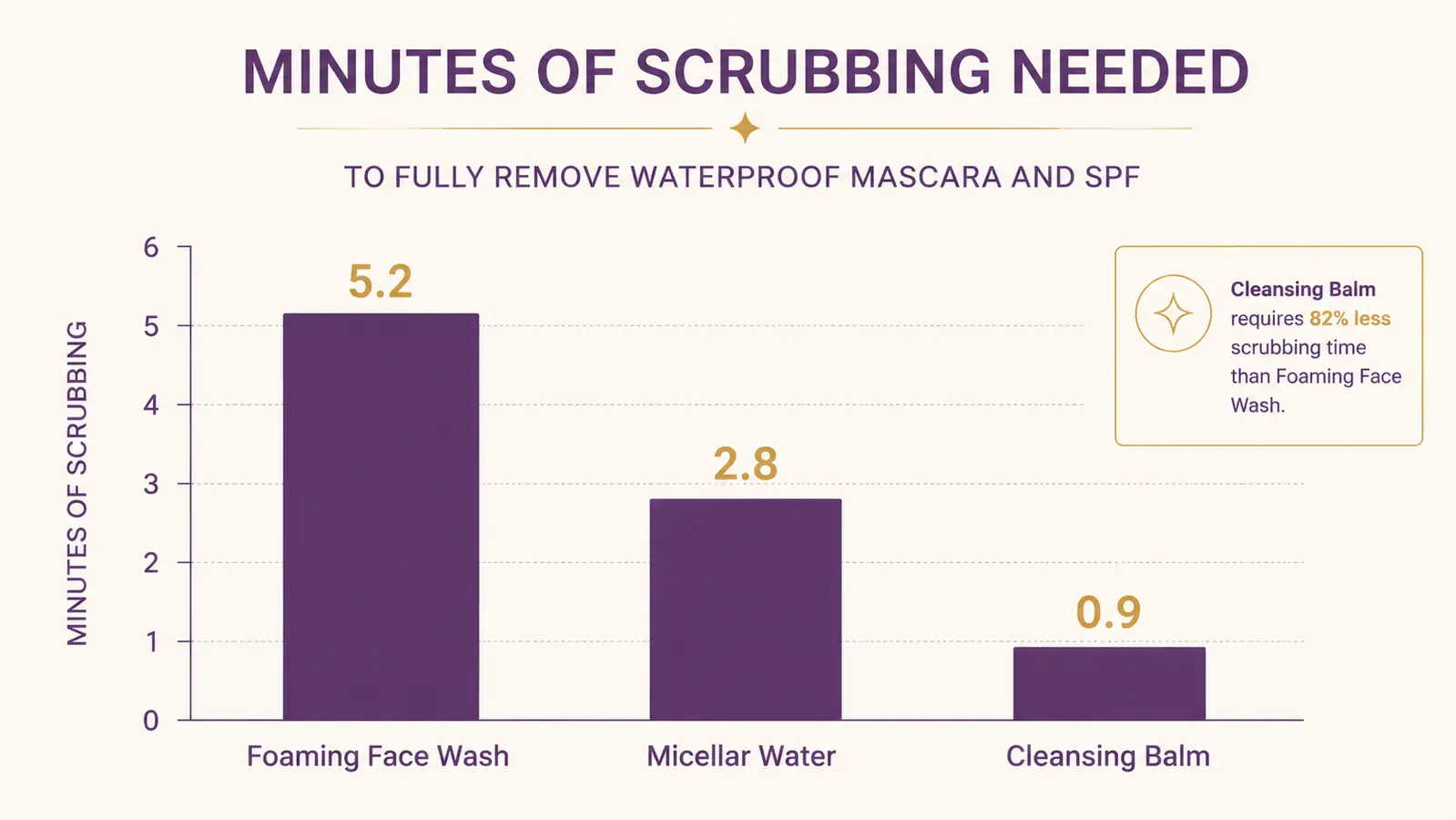
Month one was mostly about trust and technique. I had to unlearn the instinct to wet my face first, and it took about a week before the dry-hands, dry-face application felt automatic instead of backwards. What I noticed fastest wasn't a skin change, it was a time change, my nightly cleansing routine dropped from a frustrating three or four minutes of scrubbing down to about ninety seconds total, balm plus a quick follow-up wash.
Month two is where I started noticing fewer of the small breakouts I used to get along my jaw and hairline, the spots I always assumed were from sweat but turned out, I think, to be trapped sunscreen and residue that my old cleanser wasn't fully lifting off. I wasn't chasing that result when I started, so noticing it by week seven felt like an honest bonus rather than something I'd primed myself to see.
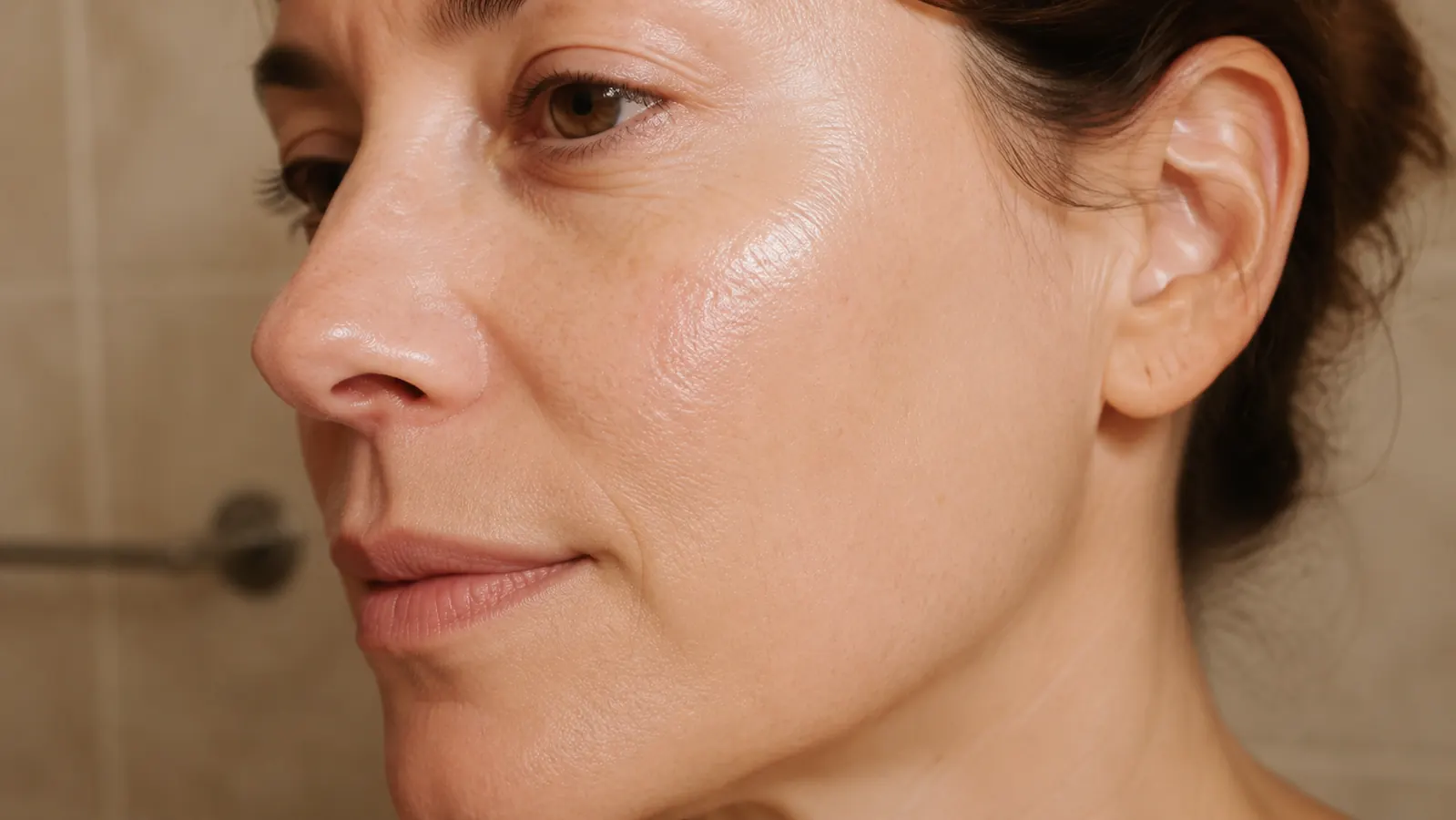
By month three, the dry, flaky patches that used to show up around my nose most winters had mostly stopped appearing, which I credit partly to the balm not stripping my skin the way foaming cleansers had, and partly to just being more consistent about washing my face properly every single night instead of some nights doing a rushed, lazy version of it. My husband, who genuinely does not comment on skincare, asked in month three if I'd started using a different foundation because my skin looked less patchy under our kitchen lights. I hadn't changed a single other product.
Month four, the most recent stretch, has mostly been about consistency rather than new results. The jar I'm on now is my second, and the routine feels less like a review experiment and more like something I'd have kept doing whether or not I was writing this up. That's usually my personal marker for whether a product earned a permanent spot.
The Jar, the Rinse-Off Question, and the Trade-offs
The jar format is the first thing to know going in. Some people dislike dipping fingers into a shared jar for hygiene reasons, and I understand the concern, though I haven't had any issue in four months of daily use with clean hands. If that bothers you, it's a real consideration, not a small one, since this line doesn't come in a pump or tube option.
The rinse-off residue question is the other thing worth being upfront about. On nights I don't follow the balm with a second cleanser, my skin can feel very faintly filmy, not greasy exactly, but not fully clean either. That's normal for oil-based balms in general, not a flaw specific to this one, but if you've never used a cleansing balm before, expect to add a quick second cleanse most nights rather than treating this as a standalone wash.
The other trade-off is speed of use versus a micellar water or wipe. This isn't a grab-and-go product, it needs both hands, a sink, and about a minute of your attention, which is fine for my nightly routine but wouldn't work for the quick midday refresh I sometimes need between delivery stops. I keep a separate micellar water in my car for that and save the balm for the real end-of-day cleanse.
What I Tried Before This
Before this jar, I used a foaming salicylic acid face wash for close to two years, which did fine on plain dirt and sweat but consistently left mascara residue behind no matter how long I scrubbed. I also went through a phase of makeup remover wipes kept in the glove box, which felt convenient in the moment but left my skin feeling tight and slightly irritated, especially along the sides of my nose where I'd have to rub harder to get the SPF off.
I considered micellar water as a full replacement instead of adding a balm step, since it's faster and doesn't require a sink. What talked me out of relying on it alone was exactly the problem I had with the wipes, it lifts makeup but tends to leave sunscreen residue behind unless you go over the same spot multiple times, and repeated wiping was part of what irritated my skin in the first place. The balm solved that specific problem in a way neither the wipes nor the micellar water fully did on their own.
What settled it for me was the combination of a short, simple ingredient list, no added fragrance, and genuinely faster full removal of waterproof mascara and SPF than anything else I've used. It costs more per jar than a drugstore foaming wash, but stacked against two years of wipes and a face wash that never fully did its job, it's the first product that's made my nightly routine feel like it's actually working instead of just going through motions.
What I Liked
- Removes waterproof mascara and SPF in one pass without scrubbing
- Short ten-ingredient list, no added fragrance, gentle on sensitive skin
- Noticeably fewer jawline breakouts by month two
- Dry, flaky patches around the nose mostly stopped appearing by month three
- Rinses cleaner than other jarred balms I've tried, no heavy greasy film left behind
Where It Falls Short
- Jar format means dipping fingers in, which won't sit well with everyone
- Can leave a faint filmy feel if not followed by a second cleanse
- Requires a sink and both hands, not a quick on-the-go option
- Costs more per jar than a standard drugstore foaming wash
- Takes about a week to unlearn the wet-face habit and trust the dry application
I almost gave up on it after one night because the dry-hands, dry-face instructions felt backwards. By month two, watching a full day of SPF and mascara disappear in one pass is the whole reason I bought a second jar.
Who This Is For
If you're outside for real stretches of your day, reapplying sunscreen more than once, and dealing with waterproof makeup that your regular face wash never fully clears, the JUNO balm earns its spot. It's also a strong fit if you've noticed small breakouts along your jaw or hairline that you can't quite explain, because trapped SPF and residue are a more common cause than most people assume. The short ingredient list and lack of added fragrance make it worth trying if your skin flares up around stronger cleansers, the way mine did with a citrus-scented one a couple winters back.
It's especially worth it if your nightly routine has been feeling like a chore that never quite finishes the job. Dropping my cleansing time in half while actually getting cleaner results is the kind of change that sticks, and four months in, I haven't gone back to reaching for the old foaming wash first.
Who Should Skip It
If the idea of dipping fingers into a shared jar is a dealbreaker for you, this format will bother you no matter how well the formula performs, and it's worth looking at a pump-dispensed balm instead. Skip it too if you need a single-step, no-sink solution for midday touch-ups, this is built for a proper end-of-day cleanse, not a quick refresh between errands. And if you're not willing to add a quick second cleanse on the nights you use it, the faint residue it can leave behind might bother you more than it bothered me.
Four months of actually finishing the job my old face wash never could. Yours starts with one jar.
If sunscreen, waterproof makeup, and a full day outside are outlasting your current cleanser, a real melt-away balm might be the missing first step. Check today's price on Amazon.
Amazon Check Today's Price on Amazon →