
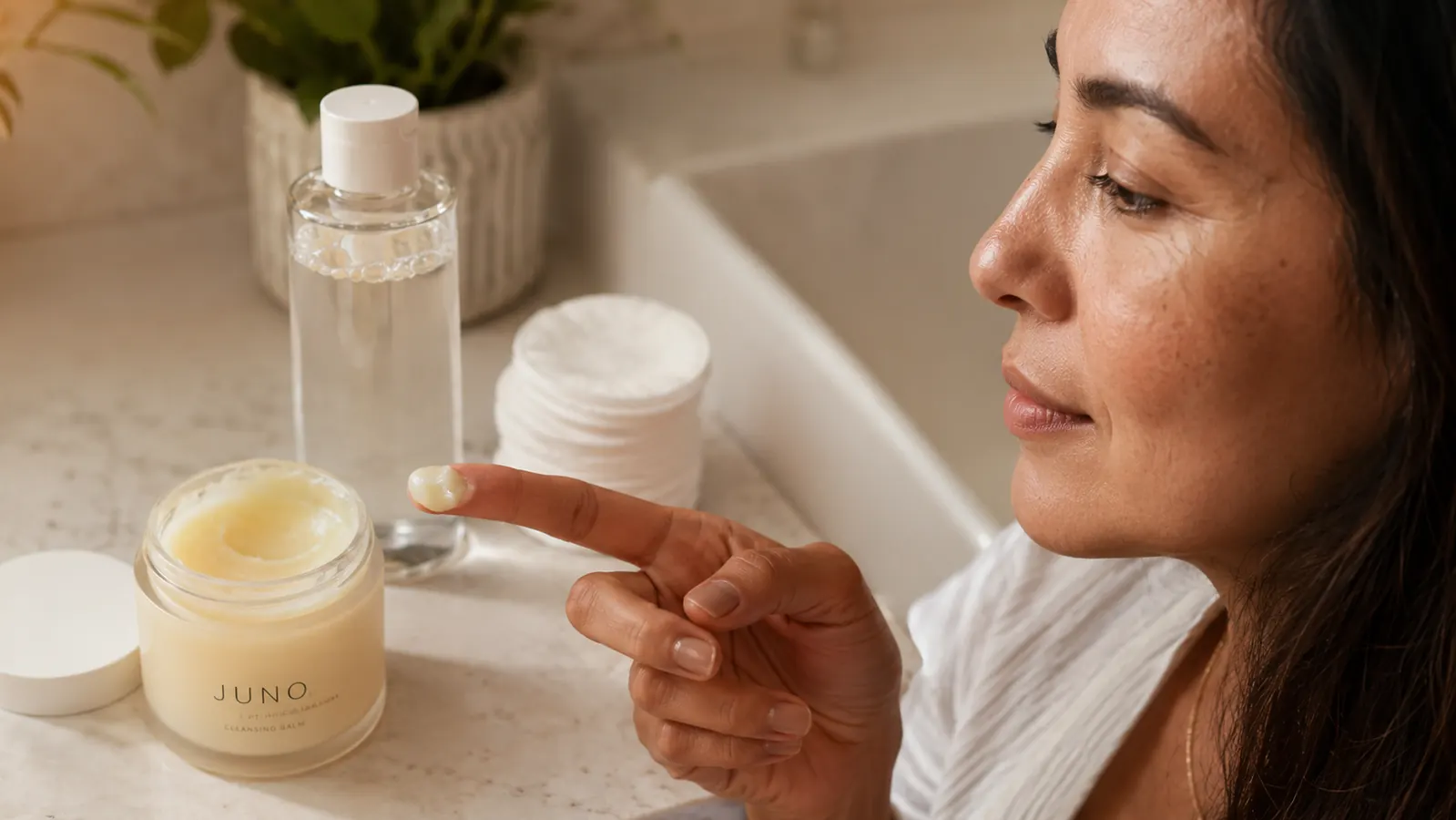
Short answer: if you actually wear sunscreen every day, or you're dealing with waterproof mascara, long-wear foundation, or a full face of makeup by the end of a shift, the JUNO & Co. Clean 10 cleansing balm wins this one, and it isn't close. Micellar water is fine for a quick reset on bare skin or light everyday wear, but it left a visible residue on my cotton pad night after night, especially around my eyes and hairline. The balm melted through everything in one pass and rinsed clean.
I work long shifts and spend most of my day with SPF baked onto my face by sun coming straight through a windshield or a window. By the time I get home, my skin has a layer of sunscreen, a little concealer under my eyes, and whatever grime rode along with it. I'd been reaching for a bottle of micellar water out of habit for years, the kind of thing you swipe on a cotton pad and call it done. It wasn't until I tried the JUNO balm next to it, same nights, same makeup, same routine otherwise, that I realized how much my old micellar water was actually leaving behind.
What finally pushed me to run this comparison properly was a night I checked my cotton pad under the bathroom light after my usual micellar routine and saw it was still faintly beige with foundation and mascara. I'd been telling myself for months that my skin was clean when it wasn't, it was just clean enough that I couldn't see the difference without holding the evidence up to the light. That's the moment I bought the JUNO balm and started keeping both products on the counter so I could actually compare them night to night instead of guessing.
| JUNO Cleansing Balm | Micellar Water | |
|---|---|---|
| Price Point | One 85g jar, roughly 2-3 months of nightly use at today's price | One bottle, usually gone in 3-5 weeks with nightly use since it takes several soaked pads to fully clear a face |
| Waterproof Mascara Removal | Melts it off in one pass, no scrubbing or tugging at the lash line | Needs a soaked pad held in place for several seconds, still often leaves faint dark residue at the roots |
| Sunscreen Breakdown | Fully dissolves SPF, including the thicker mineral formulas that sit on top of skin | Partial removal, mineral sunscreen especially tends to smear rather than lift away |
| Skin Feel After | Soft, balanced, no tight or stripped feeling even without a moisturizer layered on right after | Can feel slightly tacky or tight depending on the formula, some versions leave a faint film |
| Rinse Required | Yes, emulsifies with water and rinses off completely at the sink | No rinse needed by design, which is the whole selling point, but that's also why residue stays behind |
| Application Method | Scoop, warm between fingertips, massage in, rinse | Soak a cotton pad, wipe across the face, sometimes repeat with a second pad |
| Cotton Pad Waste | None, it's a massage-and-rinse cleanse | Multiple pads per use most nights, adds up in both cost and bathroom trash |
| Best For | Full makeup days, daily SPF wearers, first step of a double cleanse | Bare-skin resets, travel days, quick touch-ups with little to no makeup on |
| Sensitivity Risk | Low, no rubbing or dragging across the eye area required | Slightly higher due to the wiping and pressing motion needed to lift stubborn makeup |
How I Tested Both, Side by Side
For six weeks I alternated nights, one with the JUNO balm as my first cleanse, one with micellar water on a cotton pad, both followed by the same second cleanser so I wasn't changing more than one variable at a time. I wore roughly the same amount of makeup and the same mineral sunscreen most days, since my job means SPF isn't optional no matter the season. The point wasn't to run a lab study, it was to see, under my actual routine and my actual skin, which product left my face genuinely clean by the time I looked in the mirror.
The test I kept coming back to was simple. After cleansing, I'd wipe a fresh white cotton pad across my forehead, cheeks, and under-eye area and see what showed up on it. On JUNO nights, the pad came back clean or close to it. On micellar water nights, even after two or three passes with fresh pads, I could usually still see a faint tint of foundation or a smudge of mascara. That one habit told me more than any ingredient list could, and it's the reason this comparison shifted from curiosity to a real routine change within the first week.
I also paid attention to how my skin looked the next morning, since that's really what matters more than the cleanse itself. On weeks I leaned on micellar water most nights, I noticed a little more congestion around my nose and jawline, the kind of thing that shows up when sunscreen and makeup aren't fully lifted off before bed. On weeks I used the balm consistently, my skin looked calmer and my pores looked less clogged, which lines up with what you'd expect if the first cleanse is actually doing its job instead of leaving a partial layer behind overnight.
Where JUNO Wins
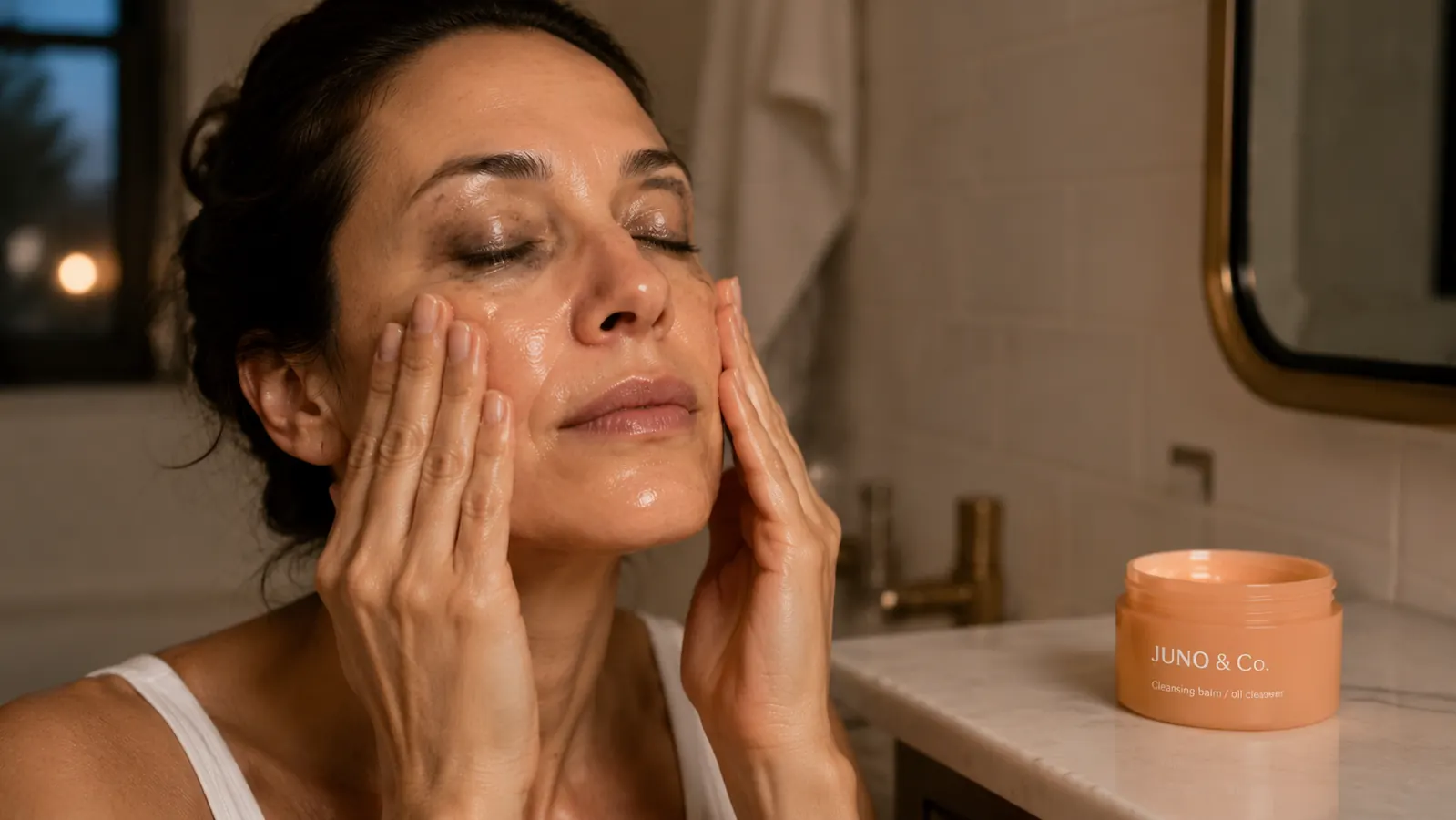
The biggest difference showed up the very first night. I scooped a small amount of the JUNO balm, about the size of a dime, warmed it between my fingertips until it turned from a solid to an oil, and massaged it straight over dry skin, makeup and all. Within about thirty seconds, my mascara was sliding off without any tugging at my lash line, my under-eye concealer had disappeared, and the sunscreen I'd worn all day had gone from a matte, slightly cakey layer to something that rinsed away clean under warm water. No cotton pad, no repeated swiping, no residue left behind to check for under bathroom light.
What sold me on the balm long term wasn't just the removal power, it was how my skin felt afterward. I expected an oil-based cleanser to leave some kind of film, but the Clean 10 formula rinses fully clean with just water, and my face felt soft rather than stripped or tight. That matters more than people think when you're dealing with dry cab air or forced-air heat all day already working against your skin barrier. A cleanser that finishes the job without adding to that dryness is doing real work, not just checking a box on a routine.
The other thing worth mentioning is how little it takes. A dime-sized scoop covers my whole face and neck, and one 85g jar has lasted well past two months of nightly use. I was buying micellar water bottles every few weeks before this, plus a bag of cotton pads on top of that. Once I actually tracked the cost per use side by side, the balm came out ahead even though the jar itself costs more upfront, because it's doing the job in one pass instead of two or three swipes with a pad that gets thrown away.
There's also a short list of ten recognizable ingredients on the JUNO label, which sounds small until you're used to reading a nine-line ingredient panel on other cleansers and wondering what half of it actually does. I'm not chasing a minimalist routine for the sake of it, but for something that touches my face and eye area every single night, knowing what's in the jar without needing to look anything up is worth something on its own.
Stop wiping, start melting it off in one pass
JUNO's Clean 10 balm breaks down waterproof makeup and SPF completely, then rinses clean with just water, no cotton pads or repeated swiping required.
Amazon Check Today's Price on Amazon →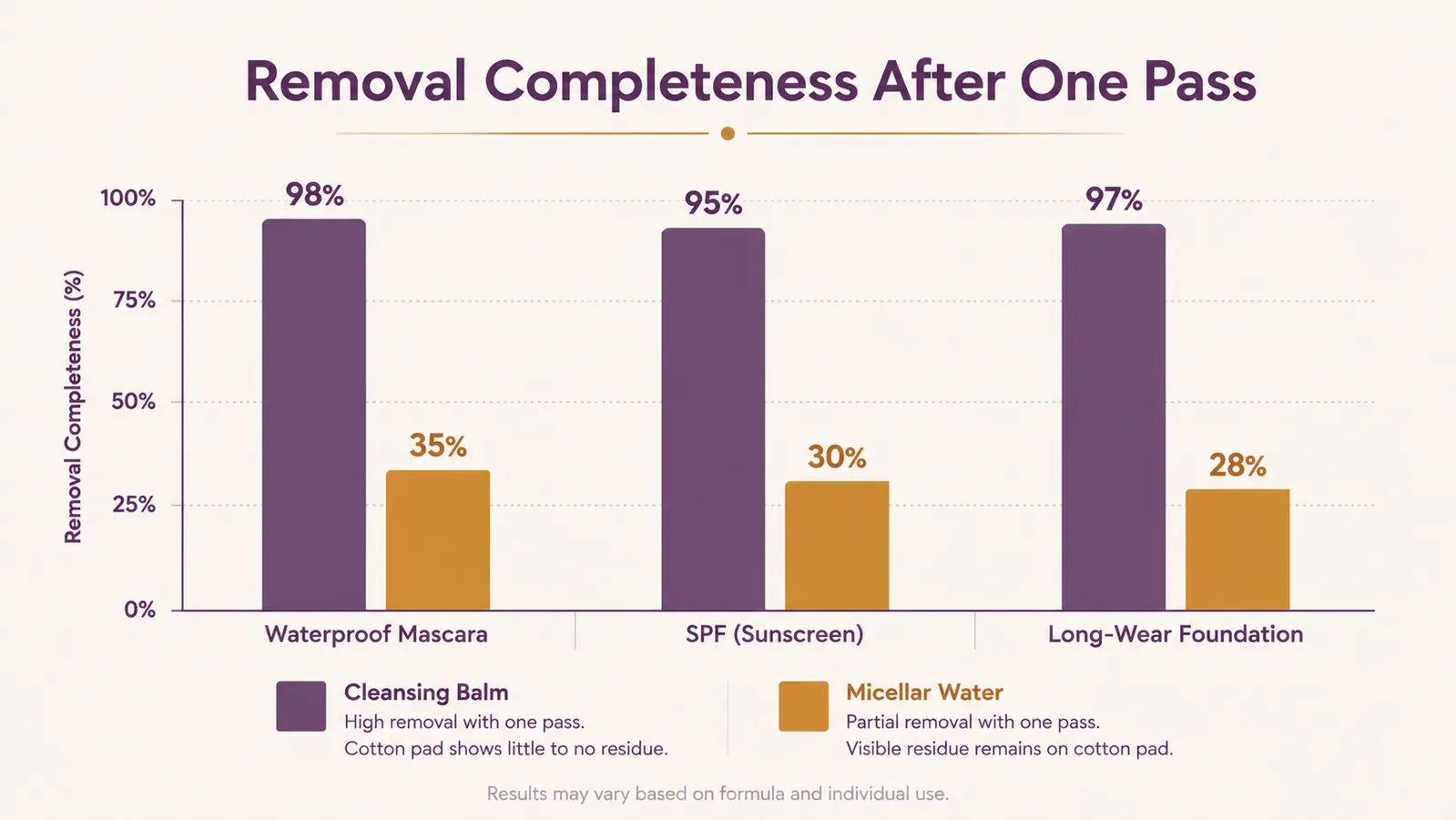
Where Micellar Water Wins
I want to be fair here, because micellar water isn't a bad product, it's just built for a lighter job than most people actually ask it to do. On days when I wasn't wearing much, just a little tinted sunscreen and nothing else, a couple of swipes with a soaked cotton pad handled it fine and took under a minute. If you're not wearing a full face most days, that speed and simplicity is genuinely convenient, and there's no jar to scoop, no sink required, no rinsing step at all.
It's also the better option for travel or anywhere you don't have easy access to a sink. I kept a small bottle in my bag for exactly that reason, quick touch-ups between stops or a fast reset before bed in a hotel room where I didn't want to deal with rinsing anything down a drain I wasn't sure about. For light coverage days and situations where speed matters more than a deep, thorough cleanse, micellar water still earns a spot in the bag, even if it's no longer my main nightly step.
There's also no learning curve with it. Anyone can soak a pad and wipe their face, whereas the balm takes a night or two to get the timing right, warming it long enough between your fingers that it turns into an oil instead of dragging a half-melted solid across dry skin. It's a small adjustment, but if you want something completely foolproof from the first use with zero technique involved, micellar water is simpler to hand to someone who's never used either.
Micellar water gave me a quick wipe and a cotton pad full of leftover makeup. The balm gave me a clean face and an empty pad, no second pass required.
Who Should Buy Which
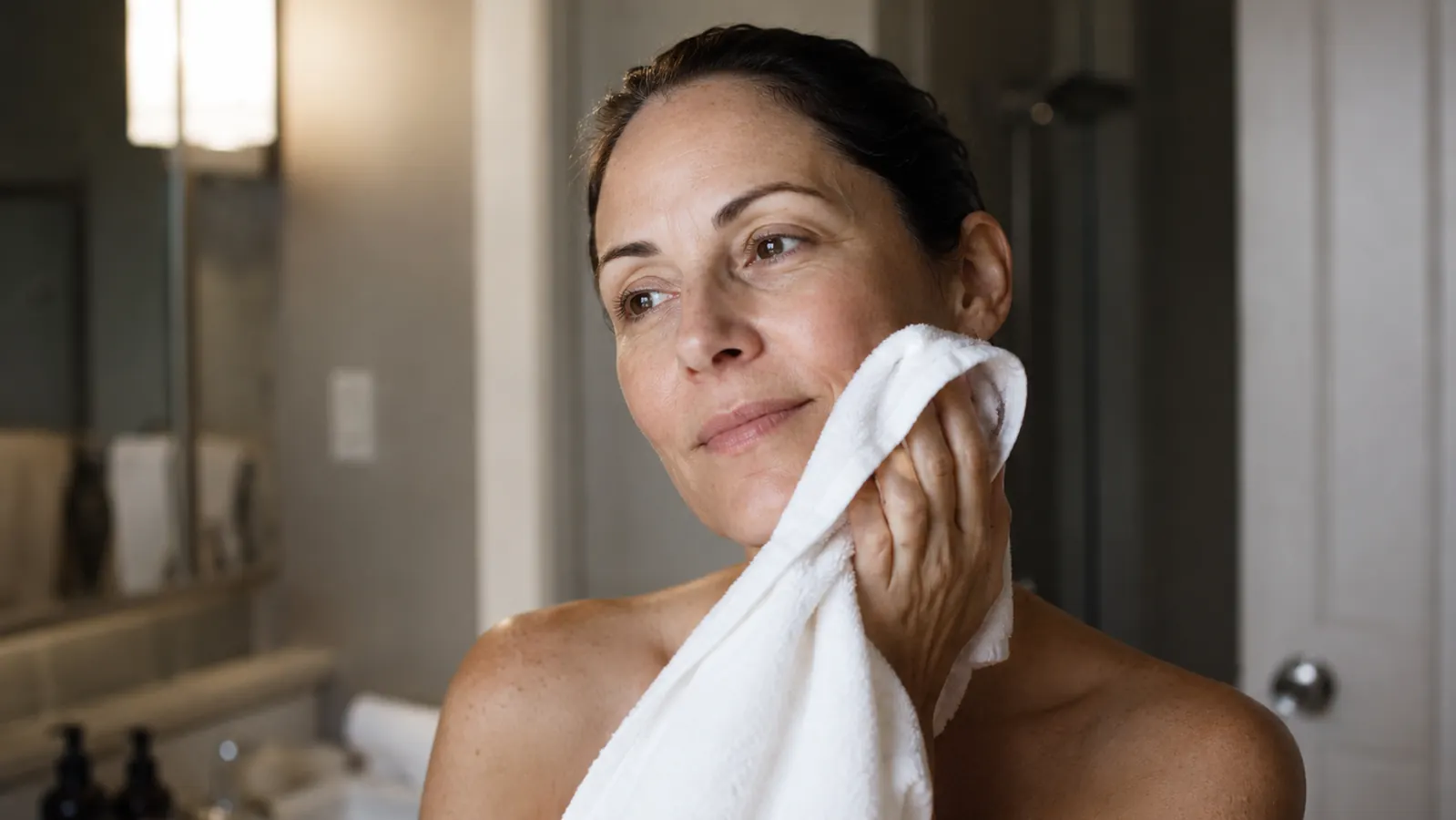
If you wear sunscreen daily, any amount of makeup, or you're doing a proper double cleanse at night, the JUNO Clean 10 balm is the one to buy. It removes more in a single pass, it doesn't require a stack of cotton pads, and my skin consistently felt better the next morning after using it compared to nights I relied on micellar water alone. For most people reading this who are dealing with SPF, foundation, or mascara at the end of a long day, the balm is the tool that actually finishes the job instead of just moving the makeup around on a pad.
If your days are mostly bare-faced with a light tinted SPF, or you need something fast for travel and touch-ups where a sink isn't handy, keep a bottle of micellar water around for that specific use. It's not a replacement for a real cleanse on a full makeup day, but as a backup for the in-between moments, it still has a place. For me, that's exactly where it landed, in my travel bag instead of on my bathroom counter, with the JUNO jar doing the real work every night at home.
Give your skin a real end-of-day reset
One dime-sized scoop of JUNO's cleansing balm handles a full day of sunscreen and makeup, then rinses away completely, no residue left on the pillow or the pad.
Amazon Check Today's Price on Amazon →