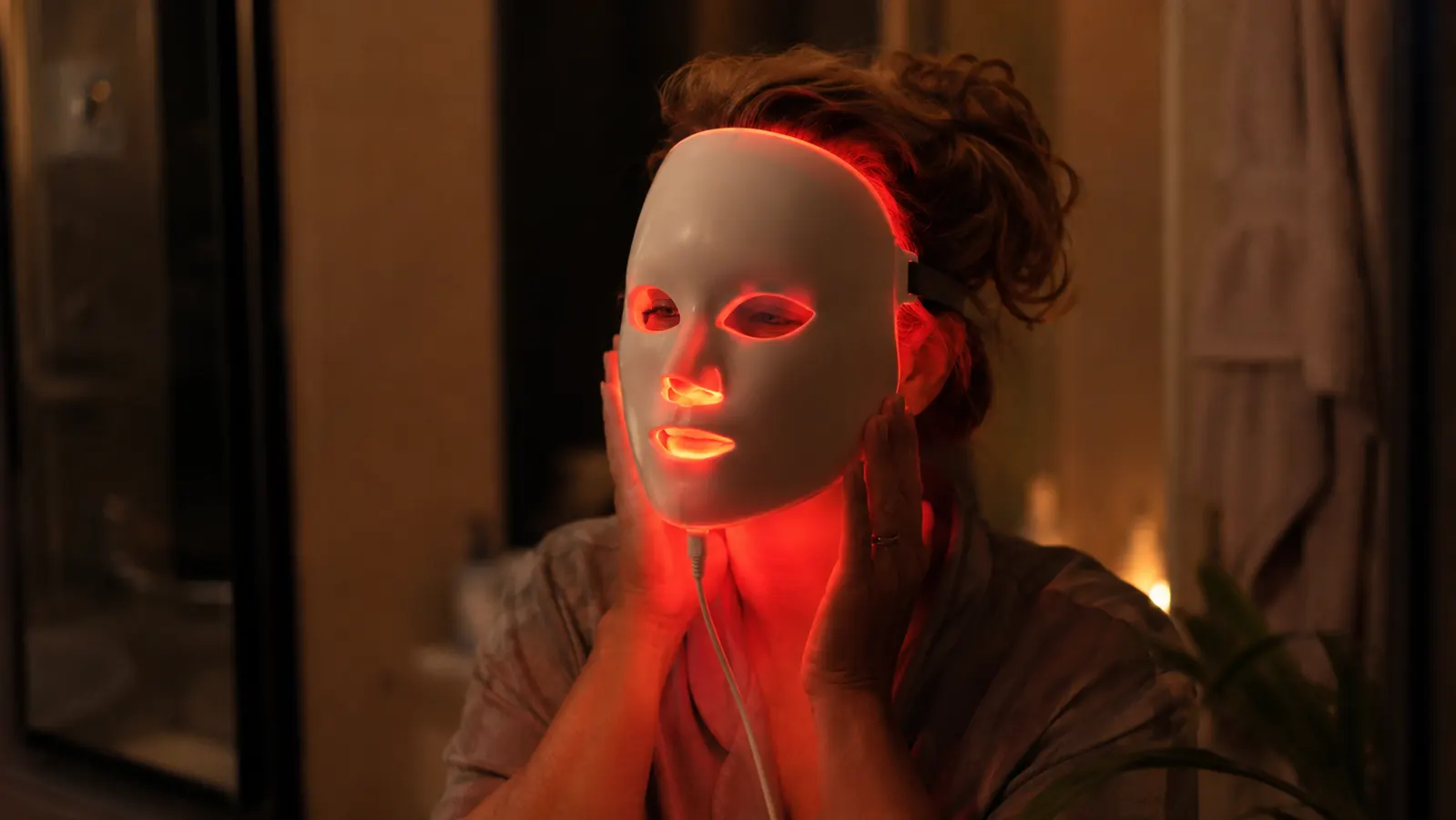
I didn't buy a red light therapy mask because I believed in it. I bought it because I was tired of my skin looking tired, uneven tone across my cheeks, a dullness that no serum seemed to touch, and the kind of texture that makes foundation sit weird by 2pm. A friend who works in aesthetics told me red light therapy was one of the few things she'd actually seen hold up outside a marketing page, so I picked up the NVBOTY mask and gave it ten minutes a night for six weeks. What follows are the ten reasons it actually earned a permanent spot on my bathroom counter, not the reasons a box tells you to buy it.
None of this is about overnight miracles. Red light therapy is slow, quiet, and cumulative, closer to a gym habit than a quick fix. But slow and real beats fast and fake, and after six weeks I had photos to prove which one this was.
See today's price on the mask that actually changed my skin routine
The NVBOTY mask is the one I tested every night for six weeks. Check current availability and pricing before you commit to anything else.
Amazon Check Today's Price on Amazon →It targets redness at the source, not just the surface
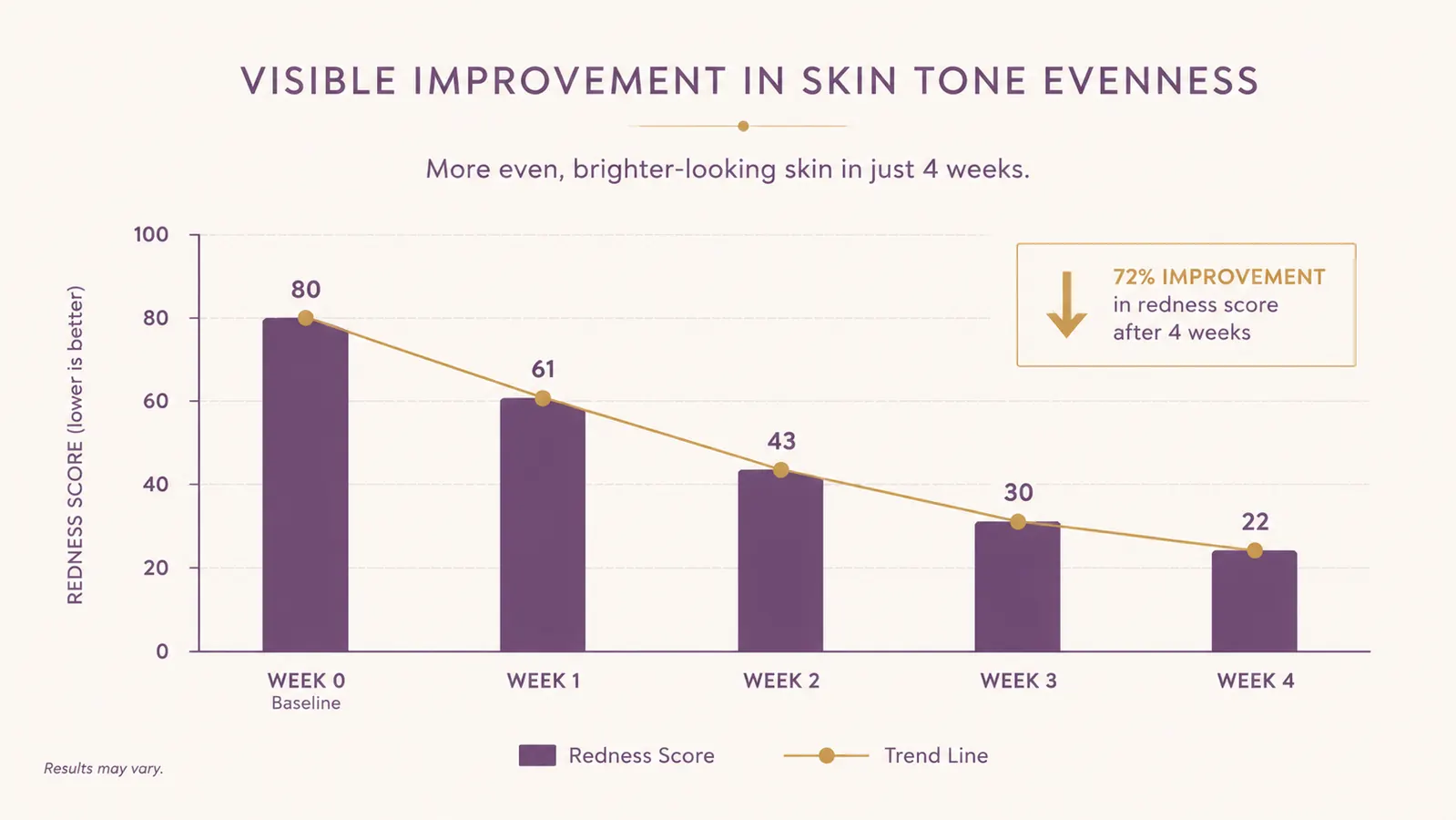
My biggest complaint before starting was the blotchy redness across my nose and cheeks that no color-correcting primer fully hid. Red light wavelengths, the NVBOTY runs at 630nm for its red mode, work on the blood vessels just under the skin, calming the inflammation that causes that flush instead of masking it with pigment. By week three, I noticed I needed less color corrector in the morning, which was the first sign something was actually happening under the surface.
The 850nm infrared mode reaches deeper than red light alone
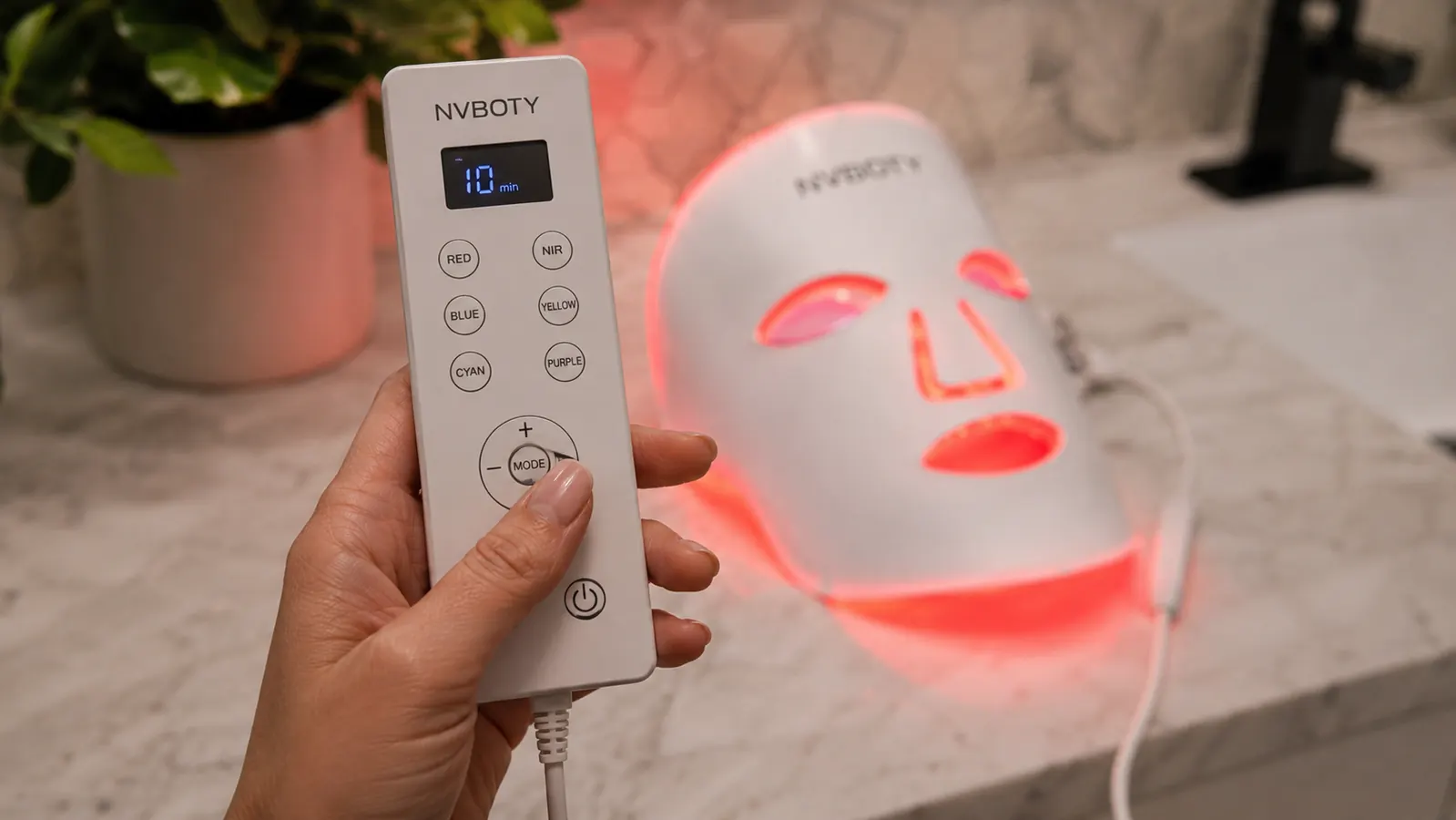
This is the detail most cheaper masks skip. The NVBOTY has a dedicated 850nm near-infrared setting that penetrates past the surface layer of skin into the dermis, where collagen actually lives. Red light alone works on the surface. Infrared is what gets credit for the firmer, less crepey feel people report around the jawline and under the eyes after a few weeks. I ran the infrared mode three nights a week specifically for that reason.
It's a passive habit, which means I actually stuck with it
I have abandoned more skincare tools than I'd like to admit because they required standing at a mirror doing something. The mask straps on, I hit the mode button, and I can scroll my phone or brush my teeth for the full ten minutes. Consistency is the entire game with red light therapy, three sessions a week for a couple months is what the research behind LED phototherapy generally points to, and a tool you'll actually use beats a better tool sitting in a drawer.
400 LEDs means fewer gaps in coverage
I compared the NVBOTY's spec sheet against two cheaper masks before buying, and the LED count was the biggest difference, 400 diodes packed across the face versus roughly half that on the bargain options. Fewer gaps between lights means more even coverage across the forehead, cheeks, and jaw, instead of hot spots of light with dark patches in between that don't get treated at all.
It helped my skin hold moisture better
This one surprised me. Around week four I noticed my usual afternoon tightness, the kind where my cheeks feel dry no matter how much moisturizer I layered on that morning, had mostly disappeared. Red light is thought to support the skin barrier's ability to retain moisture by improving circulation to the area, and whatever the exact mechanism, my skin simply felt less thirsty by the end of the day. I still used my usual night cream, nothing else in my routine changed, so the mask was the only new variable in the equation, which made it easier to trust the change was real rather than a coincidence tied to a new product.
The timing function stopped me from overdoing it
More light is not automatically better, and overuse can leave skin irritated rather than improved. The NVBOTY has a built-in timer that shuts the mask off automatically, so I never had to guess or set a phone alarm. It's a small feature, but it's the difference between a tool that protects you from your own bad habits and one that just trusts you to remember, which I would not have. I've seen people online run these masks for thirty or forty minutes thinking they'll speed up results, and that's backwards, more exposure than the recommended window just increases the odds of irritation without adding benefit.
It's genuinely portable, so travel didn't break the habit
I took the mask on a work trip in week five expecting to skip four nights. The 2000mAh rechargeable battery meant I didn't need to pack a cord or hunt for an outlet near the hotel mirror, I just charged it once before I left and used it every night I was gone. Habits that survive travel are the ones that actually produce results, because six weeks with four skipped nights is a different experiment than six weeks straight.
The blue and orange modes gave me flexibility for different weeks
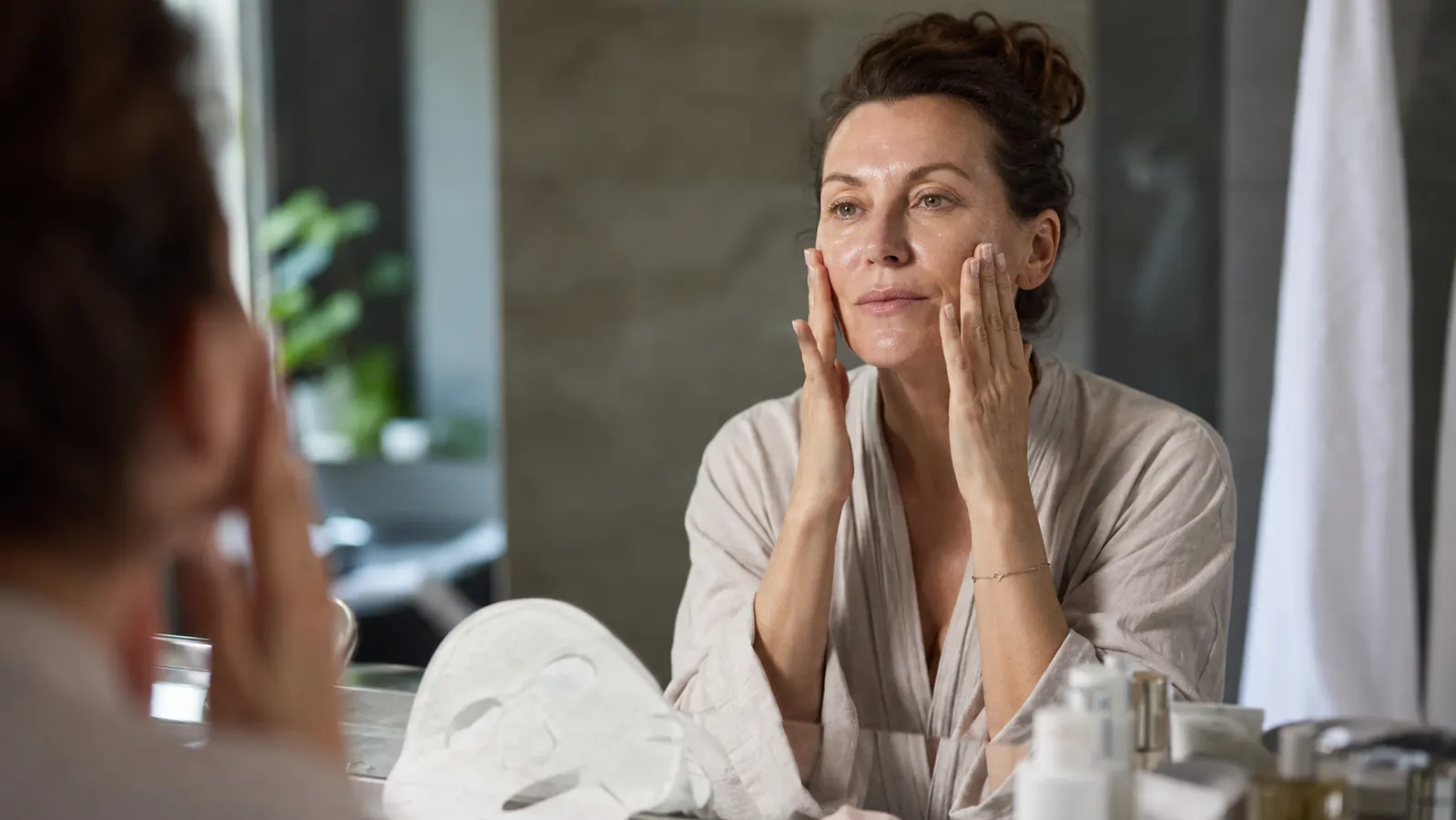
Red and infrared did the heavy lifting for tone and firmness, but the blue mode became useful during a stressful month when my skin broke out along my jaw, and the orange mode felt gentler on nights my skin was already a little irritated from a new retinol. Having four modes on one device meant I wasn't buying a separate tool every time my skin's needs shifted. Switching modes based on what my skin actually needed that week felt less like a gimmick and more like having options on hand for whatever showed up.
It made my other products work harder
My vitamin C serum and moisturizer didn't change, but they seemed to perform better once my skin barrier was calmer and my circulation was better. This tracks with how red light therapy is generally understood to work, it doesn't replace your routine, it improves the conditions your routine is operating in. Cheap serums didn't suddenly become miracle serums, but the good ones I was already using finally seemed to be absorbing the way they were supposed to. If your serums have felt like they're just sitting on top of your skin instead of sinking in, that's worth paying attention to before you blame the products themselves.
The results held up after I stopped tracking daily
By week seven I stopped taking progress photos every few days because the improvement had become my new normal rather than something I was actively monitoring. That's the real test for me. A trend that only exists while you're staring at it isn't a trend, it's a placebo. Two months later my tone is still more even and my skin still holds moisture better through the afternoon than it did before I started.
What I'd Skip
I'd skip expecting this to fix deep static wrinkles or acne scarring on its own. Red light therapy is genuinely good at tone, texture, and mild firmness over time, but it's not a laser resurfacing treatment and it won't erase years of sun damage in six weeks. I'd also skip using it if you're on a medication that increases light sensitivity without checking with your doctor first, and skip skipping the timer function, ten minutes is the sweet spot, not twenty because you got distracted.
It didn't fix everything. It just made the skin I already had look like it was getting enough sleep.
Ready to see what ten minutes a night could do for your skin
Check today's price and availability on the mask I used for this test before it's out of stock again.
Amazon Check Today's Price on Amazon →